
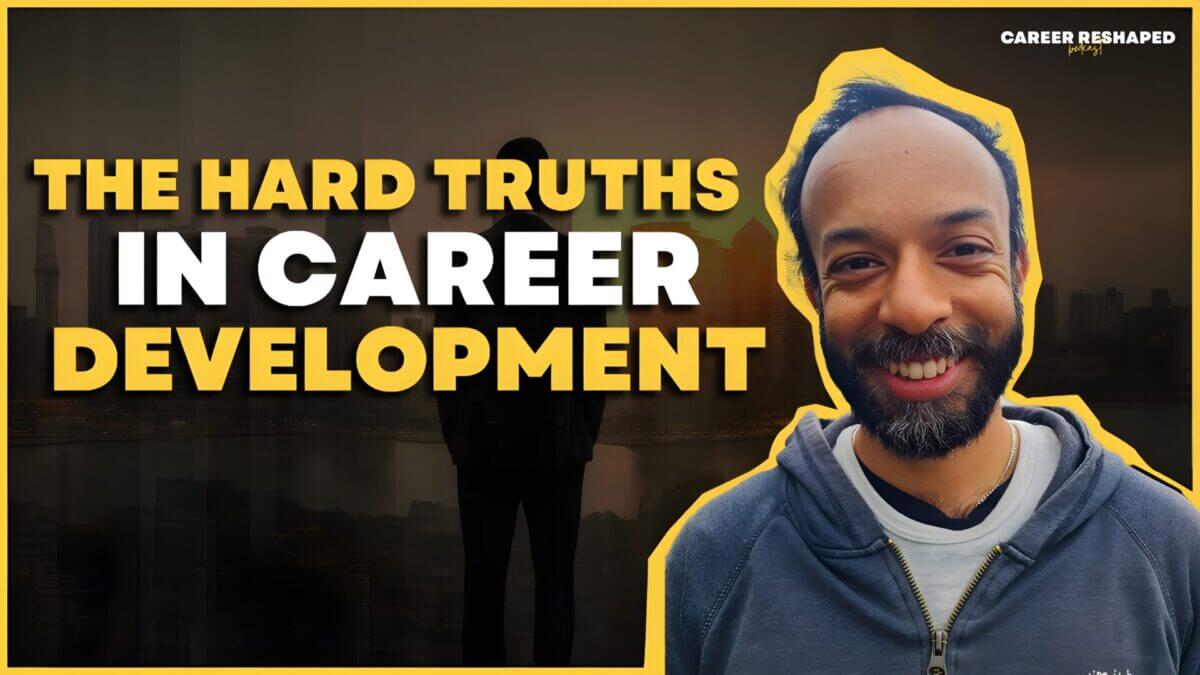
What if your career path wasn’t a straight line—but a series of bold pivots?
In this honest and layered conversation on Career Reshaped, Joey Korea shares the kind of twists most people don’t see coming—and what it really means to start over, more than once.
From studying psychology to becoming a five-star author on Goodreads, to diving deep into the world of data and launching his own podcast, Joey’s path hasn’t been traditional—but it’s been deeply intentional.
Joey opens up about the moments that forced him to pause, pivot, and reimagine what success could look like. He talks about being drawn to the intersection of numbers and stories—and how data, when used well, can help people feel seen.
As someone who’s navigated both corporate roles and creative work, he offers insight into how identity and work evolve over time—and why it’s okay to let go of titles that no longer fit.
This episode is for anyone who’s felt like they were meant for more, but didn’t quite know where to begin. Joey’s story reminds us that it’s never too late to reshape your path—and that curiosity might just be your greatest asset.
🎧 Tune in for a thoughtful, inspiring chat about career transitions, purpose, and the power of starting fresh—again and again.
| Time | Transcript |
|---|---|
| 00:00:00 | hi and welcome to another episode of Career Reshaped i'm Pauling i'm Natasha |
| 00:00:05 | and today we're speaking with Joey Korea a data enthusiast unlocking the richness |
| 00:00:10 | of life through qualitative and quantitative data he has his own podcast |
| 00:00:14 | and is also a five-star author on Goodreads he's had a few transitions |
| 00:00:19 | during his career journey and we're looking forward to learning more hey |
| 00:00:23 | it's Natasha and I'm Pauline we're so pumped to bring you even bigger and |
| 00:00:28 | better stuff this season 2 of Career Reshaped we've got new guests free |
| 00:00:33 | master classes and all the good vibes you'll only find here so don't forget to |
| 00:00:37 | hit subscribe follow us on Spotify at Careershaped and check us out on |
| 00:00:42 | Instagram at my.career.angels tada hello hi thanks for joining us |
| 00:00:50 | today that was a great jump in the enthusiasm so can you start off by |
| 00:00:58 | letting us know a bit about you where your career went how it started and |
| 00:01:03 | where it is now and we might stop you in between here and there but just get |
| 00:01:07 | going and we'll go from there yeah sure thing so I've been alive for a long time |
| 00:01:11 | so I'll just give I'll give you I'll give I'll give you a very high |
| 00:01:16 | I'm very happy to hear that so I'll give you a very high level |
| 00:01:20 | anywhere you want to drill down uh let me know but um so yeah when I left |
| 00:01:24 | school I got into a psychology degree um got a got an honors degree in psych uh |
| 00:01:30 | and then got to a point where I was just like okay can do further study here or I |
| 00:01:33 | can go work and so at that point I'd been at uni for 5 years been like in a |
| 00:01:39 | loading institution for even longer i was like I need to make this degree work |
| 00:01:43 | for me before I um work more on that so I went and got a job at a organizational |
| 00:01:49 | psychology company as probably a lot of people fresh out of uni um their |
| 00:01:54 | experience is like damn I thought I was going to be changing lives and here I am |
| 00:01:58 | just doing all this like entry level just craft basically like all the all |
| 00:02:02 | the stuff that like um all the experienced people don't want to do so I |
| 00:02:06 | was just basically it's always a rude awakening it is always uni and you think |
| 00:02:10 | oh my gosh I'm going to use my craft i'm going to go in there and I'm going to do |
| 00:02:14 | this and I think everybody thinks whether it's an accountant a doctor or |
| 00:02:18 | whatever but you always start with here's some data entry can you just do |
| 00:02:21 | that for us here's some filing what that's not what I signed up for but I |
| 00:02:25 | feel like it's fair cuz you don't really you've got the theory but you know not |
| 00:02:31 | the practice and I do know some people that when they just got out of |
| 00:02:35 | university they wanted that like managerial role and they were looking |
| 00:02:40 | for years because no one was going to give them a managerial role and I was I |
| 00:02:45 | was shocked that that was even like a thought process that they had and we |
| 00:02:51 | graduated me and this particular person actually graduated at the same time and |
| 00:02:55 | I was already in a lot more senior and they were still working in a supermarket |
| 00:02:59 | uh because they were waiting for this certain position that they thought that |
| 00:03:03 | they were entitled to have which sure absolutely you can get there but |
| 00:03:10 | you know you got to learn the basicsdisheartening going straight into that |
| 00:03:15 | the grunt work it isn't but it's probably a right of passage right uh and |
| 00:03:20 | I guess what what Pauline is saying is it kind of speaks a lot to I guess the |
| 00:03:24 | way education systems are structured right like if if it's the case that you |
| 00:03:28 | spend four years or three or four years doing this degree and getting into all |
| 00:03:32 | this debt and then you finish it and then you you're not trusted with |
| 00:03:36 | anything but entry- level skills it's like why do why do those like three |
| 00:03:40 | three years is it just a signaling mechanism snow what's that sorry you |
| 00:03:45 | know nothing Jon Snow yeah you know nothing Jon Snow exactly you know |
| 00:03:48 | nothing you know but you're right it should be a lot more |
| 00:03:52 | practical rather than theory theory is great i think it's important but the |
| 00:03:58 | practical side is invaluable and if when a person finishes university they're |
| 00:04:05 | already expected to have experience just to enter the entry level how's that |
| 00:04:10 | supposed to happen if universities can change how they structure by combining |
| 00:04:16 | practice and theory that would be money well spent I reckon for sure for sure |
| 00:04:22 | yeah um but yeah I I I could rant forever about like how the educational |
| 00:04:27 | system is set up to just like create factory workers basically like that's |
| 00:04:31 | like that's it's all set up to like basically get people to work like a like |
| 00:04:37 | 9 toive job nothing nothing outside of that kind of thing just like clock in |
| 00:04:41 | clock out and yeah 100% this that's also something I could talk for a very long |
| 00:04:46 | time on maybe a second episode serious podcasts and all that so that's it |
| 00:04:52 | that's it all right so you were in a place where you're like I'm not making a |
| 00:04:56 | difference this is not what I was expecting so what happened after that |
| 00:04:59 | yeah for sure so like um like just just to give you an idea of the grunt work it |
| 00:05:03 | was just basically like I people had printed out this like spec for me like a |
| 00:05:07 | bunch of content and I just basically had to go to a computer screen and go |
| 00:05:10 | like okay that word is there and the next word is this the next word and yes |
| 00:05:14 | that picture is that picture kind of thing it was just like very tedious work |
| 00:05:18 | so much fun not much fun at all no um that's not even practical like learning |
| 00:05:23 | experience that's data entry at its basic level it's probably one level |
| 00:05:28 | removed from data entry right is probably entering data you're just |
| 00:05:32 | checking that the data checking the data you can get a VA to do that or you know |
| 00:05:38 | exactly yeah why that's here in the process of doing that |
| 00:05:44 | though so like the the thing that I was checking on the screen was actually a |
| 00:05:46 | psychometric testing system um so it's uh I'll do a brief explanation because |
| 00:05:51 | that might sound like a whole bunch of fancy words but it's just like it's just |
| 00:05:54 | basically like a um if if uh Pauline wants to know what |
| 00:05:59 | she uh wants to do um when she leaves uni or leaves school she can come in to |
| 00:06:04 | this system and do a bunch of tests and it will tell her like what a good fit |
| 00:06:08 | for like what role would best fit her given her personality and um various |
| 00:06:14 | aptitudes and so in the process of doing this very laborious check-in I was |
| 00:06:20 | actually finding some um fairly serious problems with the system and then the IT |
| 00:06:25 | team uh basically wanted to poach me and I I was like there was this really funny |
| 00:06:32 | conversation I had with my soon to be manager which is like do you want a |
| 00:06:35 | career in IT i said no he goes well are you going to what are you doing after |
| 00:06:40 | your contract finishes here i said I don't know uh market research and like |
| 00:06:45 | he was like "Well why don't you just why don't you come work with us for um like |
| 00:06:51 | as long as it takes for you to find something and then um when you find |
| 00:06:56 | something just give us two weeks notice and you can be gone." Smart that's smart |
| 00:06:59 | of the manager to kind of pull you in that way yeah very smart um and uh this |
| 00:07:05 | this particular guy um I call I always call refer to him as legendary Steve he |
| 00:07:09 | was kind of my guardian angel throughout my um IT career cuz um yeah we went we |
| 00:07:15 | went through a whole bunch of things together and he always uh looked out for |
| 00:07:18 | me uh and I think uh one of those I think one of the great things as well |
| 00:07:23 | without making it seem too utilitarian is like I think when you look out for |
| 00:07:26 | people you build these great relationships so that um like the the |
| 00:07:31 | company prospers as well um but yeah we can we can probably go into that a |
| 00:07:35 | little bit more later if if you're interested um so I ended up working for |
| 00:07:40 | this place for about four years um which was a vast contrast to the start where I |
| 00:07:46 | basically was looking for another job within 3 weeks like when I started like |
| 00:07:49 | I was basically like I hate it here kind of thing i just want out um but one of |
| 00:07:55 | the great things about being entry level is you don't have many |
| 00:07:59 | options you just kind of take whatever you can get and so um as fortune would |
| 00:08:04 | have it I ended up staying there for about four years started building a |
| 00:08:07 | great career in in um software testing and and it in general and then I worked |
| 00:08:13 | with for the great um Australian then startup now very big corporation um |
| 00:08:19 | Atlassian um and so I had a um really good uh two and a half year stint there |
| 00:08:25 | and then um worked for various other businesses um in in a software testing |
| 00:08:31 | um test manager type role uh and then around the |
| 00:08:36 | 2018 type mark I I was I was thinking you know what I see this AI thing i see |
| 00:08:42 | this machine learning data science thing and it's really starting to take off um |
| 00:08:46 | I could perhaps work on building these skills in the background but that will |
| 00:08:52 | possibly take me twice maybe four times as long as if I just uh just try to |
| 00:08:57 | create a runway and then um and and then basically like quit my job and work on |
| 00:09:02 | this full-time and use the fear of running out of money to propel me |
| 00:09:06 | forward not something I recommend to everyone genuine fear genuine fear |
| 00:09:10 | that's it that's it so um so I I made that decision after um uh and and that |
| 00:09:16 | that was that was basically the like around 2018 was when the ideas in my |
| 00:09:20 | book kind of uh I I started um surfacing those |
| 00:09:26 | concepts and stuff that I'd used over and over again over the years and um to |
| 00:09:30 | to make career decisions finance decisions and all sorts of things but um |
| 00:09:34 | I took I kind of took that leap of faith and I got caught |
| 00:09:39 | um as like someone caught me i should probably say I didn't get caught i took |
| 00:09:44 | the leap of faith someone caught me uh and so that was um this little three um |
| 00:09:50 | person startup uh called Zaro that um they |
| 00:09:55 | uh help they help not for profofits uh retain their donors uh and so they |
| 00:10:02 | use machine learning and um well what is now called artificial intelligence to uh |
| 00:10:08 | basically um help not for profofits go like oh well I think Natasha's been a a |
| 00:10:14 | fantastic donor for us for the past like two and a half years but according to um |
| 00:10:18 | what we know about people like Natasha she's probably going to churn in at the |
| 00:10:23 | end of her third year so why don't we get why don't we get in touch with |
| 00:10:26 | Natasha and tell her she's a great donor and tell her about the the great um |
| 00:10:30 | impact she's been making through her donations and hopefully that will make |
| 00:10:32 | her stay uh and so um so that was that was a really great |
| 00:10:37 | stint it was a fantastic start because um a lot of people trying to break into |
| 00:10:42 | data science and machine learning uh it's it's really difficult to get into |
| 00:10:46 | because it's a very like sexy industry it was then it's it it is probably even |
| 00:10:51 | more so now uh and it's um I I be very thankful to um the guys at Dara if |
| 00:10:58 | you're listening thanks guys i'd be I'd be very thankful i'm |
| 00:11:03 | always very thankful for them to give me this to give me that start it was a very |
| 00:11:07 | uh fortuitous for me uh and then after that I ended up working at um a fintech |
| 00:11:15 | called the Lula that they uh do a similar thing except for banks uh and so |
| 00:11:21 | they they um specifically home loan customers and so um let's say uh Pauline |
| 00:11:27 | has a mortgage uh and um it it it kind of says an analogous thing which is |
| 00:11:33 | basically like given what we know about um people like Pauline uh they've been |
| 00:11:38 | with us um they're likely to turn in like three years after starting with us |
| 00:11:45 | so Pauline's coming into um like two and a half years let's let's get in touch |
| 00:11:50 | maybe give her a discount on her mortgage tell her like what a valued |
| 00:11:53 | customer she is and um we can perhaps um retain her because it costs cost them a |
| 00:11:58 | lot of money to get clients right i think I need to become one of these um |
| 00:12:02 | customers i I never get any phone calls from anyone to see how I'm going or try |
| 00:12:06 | to keep me cuz I think I'm just really loyal so once I'm in something there |
| 00:12:10 | forever I think I need to banks listening i'm going to change it up a |
| 00:12:13 | little bit |
| 00:12:17 | that's it give me that call discounts that's it like I think I think it's um I |
| 00:12:22 | think we generally underestimate how um expensive it is for all these big |
| 00:12:27 | organizations to acquire us and how much how much uh revenue we actually provide |
| 00:12:31 | them uh because once once we're set up it's just like pretty much like uh set |
| 00:12:36 | and forget right so um yeah definitely throw your weight around Natasha like uh |
| 00:12:41 | yeah yeah I think I need to so it's called the insurance companies the water |
| 00:12:47 | gas electricity that's it that's it there's not that many people in |
| 00:12:51 | Australia honestly compared to anywhere else in the world so they really wanted |
| 00:12:56 | need to keep you so like in Hong Kong I know my partner when he was living in |
| 00:13:00 | Hong Kong he wanted to um get a better deal so he tried the tactic of um I'm |
| 00:13:07 | I'm going to cancel my subscription like okay do you want us to cancel now he's |
| 00:13:11 | like wait no wait so like it didn't work but I know here they cancel they try to |
| 00:13:18 | retain you so yeah the whole detention department set up for it so yeah but |
| 00:13:24 | like there enough people that they don't care we've got a lot of after this |
| 00:13:29 | recording I think i'd be interested to hear the followup |
| 00:13:34 | but I think I think it's similar i think what Pauline experienced right there is |
| 00:13:38 | probably like similar to the career advice you probably give people which is |
| 00:13:42 | like when you're in a um when you get a job offer like your your best |
| 00:13:46 | negotiating position is if you've got another job offer lined up as well so |
| 00:13:50 | you can actually walk away but the worst kind of thing is like if you say like |
| 00:13:53 | Oh I can walk away." And they say "Okay cool i'll take that back." It's like "Oh |
| 00:13:57 | wait wait wait." You don't want to be in that position going "Wait wait wait." |
| 00:14:00 | Yeah that's why we have a whole negotiation skills you know know what |
| 00:14:04 | your best you know walk away point is and what you can put forward and what |
| 00:14:08 | you can't so be very careful but yes absolutely especially if you have |
| 00:14:12 | another job offer you can have that bargaining of "Well I've already |
| 00:14:15 | received that offer." It could be that you prefer to work at that place and |
| 00:14:21 | then say "Okay well go get the other offer." Crap but at least you have it as |
| 00:14:25 | a backup well it it's definitely a hard one today because at this moment it's an |
| 00:14:30 | employers um market so basically just means |
| 00:14:34 | there's a lot of people out there looking for work so if you don't want to |
| 00:14:39 | accept the offer that's okay five other people do and companies know that so |
| 00:14:45 | they may not necessarily want to negotiate with you i'm not saying that |
| 00:14:50 | you should accept a low ball offer you should definitely know what your |
| 00:14:55 | minimum is and don't go below that because you got to leave there's bills |
| 00:15:00 | and things you got to pay if you go below you're you could be in trouble but |
| 00:15:06 | it's a balance at at the moment trying to say "Okay well I know I'm |
| 00:15:10 | worth this much and I bring this much to the table this is the benefits that I |
| 00:15:14 | can give the organization if you hire me I can help solve a problem or bring you |
| 00:15:19 | more money or whatever it may be streamline things." So I'm worth this |
| 00:15:23 | much cuz I'm going to save you that much and that's kind of how you need to go in |
| 00:15:29 | to negotiate not just well no I was expecting 5K 10K 20K more that's it so |
| 00:15:37 | you got to explain why justify why you're worth more if the offer is |
| 00:15:43 | already reasonable and within sort of market rate then yeah you have to be |
| 00:15:48 | smart about how you negotiate because they can easily say sorry no no dice so |
| 00:15:54 | what was the next steps from there so yeah so like um when I was when I was |
| 00:15:57 | working at the that fintech um I came to a point where I was I was thinking to |
| 00:16:03 | myself like what what is next for me and it wasn't like after spending years |
| 00:16:07 | there it was probably around the like six to seven month mark uh and at the |
| 00:16:15 | time my my dad was retiring as well and he he had worked at a place for for 30 |
| 00:16:19 | years like in stark contrast to me where like I guess the longest I'd stayed at a |
| 00:16:23 | place was four years uh and that's considered and that is considered like a |
| 00:16:27 | long time these days yes it is yeah i think it's at three three is the average |
| 00:16:33 | yeah three years yeah that's it the rule of three right so um I So so dad dad was |
| 00:16:40 | retiring as well and I was like thinking to myself you know what like I've got |
| 00:16:44 | enough savings i'd love to spend more time with him and with mom like as as |
| 00:16:48 | like they they kind of move into this next chapter of their lives and so I |
| 00:16:52 | took a took a bit of a career break with the idea as well of like going let me |
| 00:16:56 | let me just like kind of think about what what I actually really really want |
| 00:17:00 | to do is it is it the data engineering side of things which is what I was doing |
| 00:17:04 | at Alula or is it um like I love noting out about habit design uh like how to |
| 00:17:12 | build good habits and discipline uh is it is it is it something I can do around |
| 00:17:17 | that um and that's where the idea of like going well I've got I've got quite |
| 00:17:22 | a few ideas and people keep asking me about them so why don't I crystallize |
| 00:17:27 | them in some kind of format so uh that's that's where the the idea for for um |
| 00:17:32 | from dilemmas to decisions came from uh and so yeah um the the six month career |
| 00:17:41 | breakers uh has just ticked over two years now |
| 00:17:46 | the book's doing well that's it that's it you've obviously had a few changes |
| 00:17:51 | especially starting in getting honors in psychology then going into all the the |
| 00:17:55 | techy side of things and and then a book what did you find was most |
| 00:18:04 | challenging with each change so especially go back to psychology to um |
| 00:18:11 | Alassian at Allesian um Allesian that's right yeah what was the big challenge if |
| 00:18:18 | any did you have uh so from going to psychology into do do you mean atlassin |
| 00:18:24 | specifically or do you mean going into tech going into |
| 00:18:27 | tech career change two very different things it's not like they're parallel to |
| 00:18:32 | one another that's it yeah people ask me all the time like what what what was the |
| 00:18:37 | process behind that and so part of it was the idea of like it it was a it was |
| 00:18:42 | a relatively smooth transition in that it wasn't like I went from psychology to |
| 00:18:46 | work in a tech company like Atlassian for example i went from psych went from |
| 00:18:50 | studying psychology to working in an organizational psychology company which |
| 00:18:54 | is um uh I just referred I keep calling it the site company it's um Chandler |
| 00:18:58 | Mloud group like like a really big uh I think their main thing is recruitment |
| 00:19:02 | now but at the time they offered a whole bunch of um other services like um |
| 00:19:07 | vocational placement and stuff like that so |
| 00:19:11 | um the the it w it it was kind of like quite a nice organic unfolding which is |
| 00:19:18 | great because at the time I didn't know anything like probably still I don't |
| 00:19:22 | know anything but like uh 15 20 years ago I knew far less and so I think if it |
| 00:19:29 | was the case that I um went from studying studying psychology to |
| 00:19:37 | studying to going into an or side company that didn't have that IT |
| 00:19:41 | component where I was literally just doing that that that check-in thing day |
| 00:19:45 | in day out i probably would have I don't know what I would have done i think I I |
| 00:19:50 | think I probably would have just like accepted it because you don't know any |
| 00:19:52 | better right and you're getting money and stuff like that and your parents are |
| 00:19:54 | proud of you and so it's just like um I guess this is work you know i guess |
| 00:20:03 | that's it yeah i wish I could tell you that it was like a very intentional |
| 00:20:06 | process but I think I was like as an early 20some just kind of like buffeted |
| 00:20:12 | by the winds of just like whatever life was kind of demanding from me I just |
| 00:20:17 | would kind of do it without any particular um long-term goal well that's |
| 00:20:22 | very interesting because a lot of people that we've spoken to they've said |
| 00:20:25 | similar in terms of accepting what's come their way so you know you had that |
| 00:20:31 | offer have you thought about transitioning to this have you thought |
| 00:20:34 | about doing that no I haven't but you did it anyway because trying something |
| 00:20:39 | new you don't know where it's going to lead you and it's not that we're telling |
| 00:20:43 | people go do all the things if someone says "Hey do you want to be a skydiving |
| 00:20:48 | instructor?" You say "Yeah sure." If you're got a fear of heights it's not |
| 00:20:52 | going to work before we get into the nitty-gritty of this topic we just |
| 00:20:56 | wanted to check in and say that if you believe that you need some assistance |
| 00:21:00 | and that we could help you reach out to us today check out our website join our |
| 00:21:05 | newsletter we'd love to be in touch we wanted to quickly mention that |
| 00:21:09 | subscribing to the podcast is the best way to support the show and ensure you |
| 00:21:14 | never miss an episode it's super easy just click the subscribe button whenever |
| 00:21:20 | you're listening thanks for tuning in okay so then my question is is a lot of |
| 00:21:25 | I know a lot of people listening that might say okay but you in your 20s |
| 00:21:30 | that's easy you have the flexibility of trying new things and saying yes to |
| 00:21:36 | throwing caution to the wind because you don't have really anything else holding |
| 00:21:41 | you back you don't have a mortgage you don't have kids whatever it may be so |
| 00:21:45 | what about today what about if an opportunity came around today how would |
| 00:21:50 | you approach it like something different um whether it's the same thing but |
| 00:21:55 | you're only just discovering it now that it only knocks on your door now or |
| 00:21:59 | something different altogether like marketing um or whatever came knocking |
| 00:22:04 | at your door what will be your thought process now for another shift and how |
| 00:22:10 | would you handle it today versus then yeah it's it's maybe not so |
| 00:22:15 | hypothetical because as you guys probably know like when you um when you |
| 00:22:20 | run a business you it's there there are like many different opportunities that |
| 00:22:24 | get thrown at you you mentioned marketing and that that is like funnally |
| 00:22:27 | one of those things that I've had to kind of learn on the go and it it has |
| 00:22:30 | been one of the things that also it does tickle my psychology tendency a |
| 00:22:35 | little bit as well so it it it is one of those things where I I like I like |
| 00:22:40 | pursuing but at the same time it's just like okay like you're you're doing all |
| 00:22:44 | this like content marketing and stuff like that like what about what about um |
| 00:22:49 | actually um sharpening up the coaching programs or like writing the |
| 00:22:54 | next book or like making this current book better uh all the all these all |
| 00:22:58 | these different opportunities right uh so the way I would approach it let's |
| 00:23:04 | let's say the marketing thing right |
| 00:23:06 | Let's say someone says "Hey Joey like I can see that like your marketing for |
| 00:23:11 | your book or your marketing for X product that you've got out there is |
| 00:23:14 | like really top-notch who do you use?" And I'll say like "Oh I don't actually |
| 00:23:18 | use anyone i just do it all myself."They go "Oh would you be willing to do |
| 00:23:22 | some work for me and a couple of my friends or something like that we'll pay |
| 00:23:25 | you we'll pay you." And stuff like that so that will that will mean like okay I |
| 00:23:30 | have to make a decision between um people that are kind of like beating |
| 00:23:36 | down my door to say like hey I want to give you some marketing work versus uh |
| 00:23:40 | like selling more kind of like self-improvement stuff which is like a |
| 00:23:43 | really hard slog because like the the um uh it's it's it's it's yeah it's flooded |
| 00:23:49 | saturated and like that I never really intended to get into the to the |
| 00:23:53 | self-help but apparently apparently that's that's where I am so uh like when |
| 00:23:58 | when I was when I was writing From Dilemas to decisions I was like "Oh this |
| 00:24:01 | is a data book this isn't a self-help book but apparently it's a self-help |
| 00:24:04 | book." When it when I published it on Amazon it was um it it just like went |
| 00:24:09 | into the uh top something of um creative self-improvement or something which I |
| 00:24:15 | didn't even know was a genre oh there's so many genres now there's so many |
| 00:24:19 | genres that's it that's it but yeah I guess back to that decision it's it's it |
| 00:24:24 | comes back to Okay well do you think that this is going to be a long-term |
| 00:24:28 | thing for you or is this like a shiny object that is a um it's a quick win and |
| 00:24:34 | quick wins can be good sometimes but it depends on like what problem that's |
| 00:24:37 | solving for you so like if my if it looks like I've only got like about two |
| 00:24:41 | weeks of savings left and a quick cash injection might be good it's one of |
| 00:24:47 | those things where it's like okay Joey like the burning platform for you at the |
| 00:24:52 | moment is the is the money so take the take the path that's going to solve that |
| 00:24:56 | problem for you at least in the short term and and maybe just put like |
| 00:24:59 | boundaries around it as well and say like um I think I think this engagement |
| 00:25:04 | is uh I think I can solve these problems for you in in about 6 months what do you |
| 00:25:10 | think about that but I probably wouldn't be willing to solve like I probably |
| 00:25:13 | wouldn't be willing to be like a chief marketing officer for you or anything |
| 00:25:16 | like that as if anyone's going to ask me to be a chief marketing officer but |
| 00:25:19 | hypothetically right um so I think I think it's about taking a step back and |
| 00:25:26 | and and looking at long-term goals looking |
| 00:25:29 | at values uh and and and seeing which path best aligns with those things and |
| 00:25:38 | um that's that's probably the first step um so I I'll pause there Pauline and see |
| 00:25:43 | if I've answered your question or if you follow actually I think I like the the |
| 00:25:49 | approach of what solving my problem what what problems do I have that I need to |
| 00:25:54 | solve which is um look the advice that I give to a lot |
| 00:25:58 | of um our clients is that look I know you're looking for this kind of job it's |
| 00:26:02 | really hard to get in there but if you take this job maybe just for 3 months it |
| 00:26:08 | will help you to get some income get some experience may open more doors i |
| 00:26:13 | never sort of looked at it as oh you have a problem this will solve your |
| 00:26:16 | problem like I didn't never use those words specifically but that is the |
| 00:26:23 | intention so I actually I like that because I think it |
| 00:26:28 | summarizes really clearly what that step is not necessarily |
| 00:26:34 | um a step backwards or side sideways or anything cuz a lot of people look at it |
| 00:26:40 | that way like this is not what I want so I shouldn't be doing it but it's not is |
| 00:26:47 | just the immediate solution to a problem to help you get to the next stage of |
| 00:26:53 | where you want to be which is great but again maybe it's the solution to a |
| 00:26:58 | problem and you try it and you love it like I was actually in a very similar |
| 00:27:02 | position when um during the global financial crisis when I was |
| 00:27:07 | um let go uh you know a lot of uh companies were shutting down and so |
| 00:27:13 | everyone's a lot of of us were made redundant and I was looking for work I |
| 00:27:17 | was you know like many of of us quite stressed and so I did find a job it was |
| 00:27:22 | in ad like administration it's you know I |
| 00:27:28 | was doing a master's master's degree in HR and I've got all this HR experience |
| 00:27:34 | to go into admin but I took it because I needed the incumbment and something uh |
| 00:27:41 | better than nothing right and the thing is it was for a um basically looking at |
| 00:27:46 | medical legal cases was for an occupational therapist people that |
| 00:27:49 | injured themselves at work and they were going through work cover making claims |
| 00:27:54 | and the company we were assessing their injuries and looking at alternative |
| 00:27:58 | employment based on their transferable skills and medical restrictions and all |
| 00:28:04 | I was doing was the admin right but it took only a few months for me to start |
| 00:28:12 | actually writing the reports and doing the research and I I could see a link to |
| 00:28:17 | what my background was because I was looking at employment skills what can |
| 00:28:22 | that person do i was job searching i was researching for them and it was |
| 00:28:27 | fantastic because I grew in that role i actually really enjoy that role i got a |
| 00:28:32 | different skill that was able to bring back into HR and even more so now in my |
| 00:28:40 | career angels where I doing career change so what looked like a backwards |
| 00:28:45 | step or something that was not aligned to my career and I only just took it |
| 00:28:50 | just to solve a problem immediate problem end up being so valuable and |
| 00:28:57 | enjoyable i didn't think I would like it but I loved it so I think sometimes you |
| 00:29:02 | have to say yes to things you can always say no later and that was the thing i |
| 00:29:07 | wasn't sure if I was going to um take the job because I'd just at that moment |
| 00:29:13 | also enrolled into that mast's program which I wanted to do full-time and I was |
| 00:29:16 | talking to my mom about it i said "Oh I don't know like I got this opportunity." |
| 00:29:20 | She's like "You can always quit you can always quit." She said "But |
| 00:29:24 | you can't always go back and say "I changed my mind give me the job." So |
| 00:29:28 | true so I gave it the chance and I loved it so you know I left a year and a half |
| 00:29:36 | later I left when things got better in in the HR industry or in general in the |
| 00:29:41 | economy but it was a great choice so you know you someone wants to do marketing |
| 00:29:47 | look we need marketing so if you if you Yeah hey |
| 00:29:51 | you always you never know where it could lead marketing off my story could guide |
| 00:29:55 | you somewhere another exciting path so that's it that's it yeah yeah and and I |
| 00:30:02 | guess the Oh sorry i was just going to say I guess the the tension between like |
| 00:30:06 | the just say yes you don't know where it's going to lead you um the I guess |
| 00:30:12 | the that's often in tension with um you need focus like as in there's there's |
| 00:30:18 | something in front of you like um for instance the uncertainty of of starting |
| 00:30:22 | a business or like launching a new product it's um really tough because |
| 00:30:29 | it's you just don't know like all this work you're putting into it is it going |
| 00:30:32 | to work out or not and it can be tempting to uh basically take short-term |
| 00:30:38 | wins that are in front of you however like Pauline was saying like you can um |
| 00:30:43 | you can never like go back and say like "Oh can you give me the job please i've |
| 00:30:47 | changed my mind." And that's true i think the other side of the other side |
| 00:30:50 | of it is like if you like if I end up like looking five years back and go like |
| 00:30:55 | Oh like I remember I was trying to write a book whatever happened to that? |
| 00:30:59 | And it was like "Oh you actually took that job remember?" I was like "Oh yeah |
| 00:31:03 | I did i did." And like the question is do you consider that like something that |
| 00:31:08 | you did to to solve a problem an immediate problem in front of you or was |
| 00:31:12 | it a distraction to take you away from something like an uncomfortable feeling |
| 00:31:16 | of uncertainty and um that's that's why I always encourage people and encourage |
| 00:31:22 | myself as well whenever I'm making a decision like that to write down the |
| 00:31:26 | reason why I'm making this decision because sometimes you'll come to the end |
| 00:31:29 | like a decision will play out five years later or something and you'll go like |
| 00:31:33 | you'll ask yourself rhetorically what was I thinking um and often people don't |
| 00:31:38 | have an answer to that because they haven't written it down anywhere so I |
| 00:31:41 | try to get myself and um the people that come to me for advice to basically say |
| 00:31:45 | like write it down somewhere and then set a review date not five years from |
| 00:31:49 | now usually like about three months from now and then you won't have to ask that |
| 00:31:54 | question anymore because you will actually literally know what you were |
| 00:31:57 | thinking at the time and then you can learn from that so um yeah I try my very |
| 00:32:02 | very best to live my life with no regrets right because and I know it's |
| 00:32:07 | hard and we all have something that we've done that we regret whether it's |
| 00:32:10 | that Saturday night out or what not you know like me for me it's the tattoo very |
| 00:32:16 | impulsive I blame ADHD on that it's nice though I mean this is a permanent |
| 00:32:21 | decision that I regret um multiple times a few of them right um |
| 00:32:28 | but I do try my best to live a life of no regrets and one of the things that I |
| 00:32:34 | try to remind myself when I look back like why did I do it is to remind myself |
| 00:32:39 | well you know what but in that moment it was the right choice for me right in |
| 00:32:45 | that moment so but the only way that you know if it's the right choice for you is |
| 00:32:50 | like what you said you got to not be impulsive like the tattoos uh but |
| 00:32:56 | actually sit down and analyze the situation like is this right for me is |
| 00:33:00 | it not and you know you want to think about your future self and make your |
| 00:33:04 | your future future life easier but that's never going to be a guarantee and |
| 00:33:10 | so if you turn around and go like "What happened to that book i always wanted to |
| 00:33:13 | write that book oh yeah I got the job but you know what i needed that job and |
| 00:33:18 | I wanted that job as well." That was the right thing for me it's a shame I didn't |
| 00:33:25 | write the book simultaneously i could have done that but you know what i can |
| 00:33:29 | do it now that's it that's it and I think we were talking before like off |
| 00:33:34 | off uh the podcast was about time frames and so much of us love to put a a |
| 00:33:40 | calendar date on when we are supposed to achieve something and if we haven't |
| 00:33:43 | achieved it by that day it that opportunity has |
| 00:33:48 | expired but that's not true that's that's in our heads that's |
| 00:33:53 | society but that is not really reality you if you think about it like how many |
| 00:33:59 | more years of life do you have God willing but how many more years of life |
| 00:34:03 | we set up um weekly goal planners and we look at it each week and we go through |
| 00:34:10 | it and uh check it daily just to make sure they're ticking or exing and that's |
| 00:34:14 | fine and we say put in all your goals so sometimes it's also like put in the |
| 00:34:19 | personal stuff too like what you wanted to do outside of the career side but if |
| 00:34:24 | you haven't ticked it move it on to the next week it |
| 00:34:29 | doesn't mean you have to forget about it it doesn't mean that you failed it |
| 00:34:32 | doesn't mean it's a oh I didn't get to do it it's I'm regretting it now no it's |
| 00:34:36 | fine because life happens you got sick your you know your car broke down you |
| 00:34:43 | your friend got sick whatever it is these things happen and it could be like |
| 00:34:46 | in your case a job offer is that going to be the right thing for me or not or |
| 00:34:52 | you know with pen the the admin side so it's just things can maybe become a |
| 00:34:58 | hurdle but they don't have to be a brick wall you can still just push it to the |
| 00:35:03 | next one jump over that week move your goal forward absolutely fine and once |
| 00:35:10 | our clients realize that as well you can sort of just the shoulders go down just |
| 00:35:15 | the relief of okay I it's okay if I don't achieve that this week i'll try |
| 00:35:20 | and try really hard as long as you're doing your best if you're going to slack |
| 00:35:24 | off and not care then that's also it's on you but we're going to keep prompting |
| 00:35:28 | you but as long as you've tried to achieve it that's already something you |
| 00:35:34 | should be proud of just that effort people forget that life happens and it's |
| 00:35:40 | not it's not so black and white is it it's not like I'm going to focus on my |
| 00:35:44 | career and nothing else matters you know I you hear all these people that like |
| 00:35:49 | you know you don't go out you don't see your friends you don't eat you don't |
| 00:35:52 | sleep you just live and breathe and then by the time you're 40 you can retire |
| 00:35:57 | living on a who you going to retire who are you going to do you |
| 00:36:03 | you're eating noodles like life is about to be is a balance of experience and joy |
| 00:36:09 | it's not just about work i don't think we were put on this earth to be you know |
| 00:36:14 | was it workh horses workh horseshor I was going to say work dogs but I think |
| 00:36:18 | that that's right workh horses like you know we as a society created these |
| 00:36:24 | things because of you I think before was like what like you know I've got a cow |
| 00:36:29 | you've got a chicken let's enjoy you know uh but it was all about community |
| 00:36:34 | and storytelling and all of that and now with the economy all these other things |
| 00:36:41 | have come up so and you know and then it's something |
| 00:36:45 | bea becomes our identity as |
| 00:36:49 | well you know you got to enjoy you got to feel that you also have balance like |
| 00:36:55 | family friends community that's one part of living a long and happy healthy |
| 00:37:01 | life what you do and purpose and employment it's just another part it's |
| 00:37:07 | not the only part and life happens life happens cuz you got family you've got |
| 00:37:12 | friends you've got uh your own things your own mental and emotional |
| 00:37:19 | needs stuff i'm sorry you're not just tearing up because |
| 00:37:24 | you're an inspirational passionate about is about I talk about this book all the time it's |
| 00:37:33 | only because I resonated with it so much it's ikiguai the Japanese uh so you know |
| 00:37:40 | it's about ikiguai what this book's about is about how to live a long and |
| 00:37:45 | happy life and it's just it's not one thing it's multiple things it's about |
| 00:37:52 | movement of the body it's about diet it's about community |
| 00:37:58 | purpose finding passion and flow with what you do so it's it's a combination |
| 00:38:07 | and I think that living and breathing work to try to achieve a goal and only |
| 00:38:12 | that and if you don't get it by this day this |
| 00:38:16 | time you are cutting yourself off from all these other moments of joy and a lot |
| 00:38:22 | of people when I hear like what nurses say about what |
| 00:38:27 | um their elderly patients say on the deathbed a lot of it is I wish I didn't |
| 00:38:32 | work as much I didn't wish I work as hard so I have a question Joey after all |
| 00:38:37 | the techy stuff you took a break of like you thought to spend time with your |
| 00:38:42 | parents which I love that's fantastic everybody probably went a when you said |
| 00:38:47 | that but then the whole thing about the book and I like that you analyzed what |
| 00:38:53 | what do I do like what is my next thing so I actually have I guess two questions |
| 00:38:58 | one Yeah did you No question limit question |
| 00:39:02 | limit one make it three make it three questions three yeah 10 |
| 00:39:11 | that's going to be a long podcast no one is did you use any tools to self analyze |
| 00:39:16 | or did you did you go online did you reach out to anyone any coaches any |
| 00:39:22 | mentors did you speak to people what tools did you use to help you self |
| 00:39:28 | analyze and figure out your next steps and the second question is what |
| 00:39:33 | challenges did you face with the whole book thing like had you written a book |
| 00:39:39 | before had you you know so two very different questions so the first one is |
| 00:39:44 | the tools you used if any on that selfanalysis and reflection to figure |
| 00:39:49 | out what you were going to do next yeah sure thing i'll try and keep like um |
| 00:39:54 | reflection and introspection stuff like that is something that I am a complete |
| 00:39:59 | nerd on like I just I just love it so um I'll try and be as concise as I can but |
| 00:40:05 | feel free to double click anywhere you want um but yeah since |
| 00:40:10 | 2007 I've been like I journal like um and it's it's gone through various |
| 00:40:15 | evolutions but um I guess over the past fiveish sixish years probably even |
| 00:40:22 | longer um I have a process where like every week I |
| 00:40:28 | um think about like how am I converging or diverging from my values um what |
| 00:40:34 | insights have I learned during the week what are things that I'm not sure are |
| 00:40:38 | good or bad i call them I just call them considerations so like what are things |
| 00:40:40 | that my brain's chewing on at the moment um things that are specifically causing |
| 00:40:44 | me anxiety uh and um what I'm going to take away from the above data points and |
| 00:40:51 | then at the end of every month these weekly these this like weekly |
| 00:40:56 | qualitative data gets pushed into like a monthly frame and I take I zoom out and |
| 00:41:00 | I go okay so what are the big what are the big like uh things that I can draw |
| 00:41:05 | out of this uh it's kind of like what I did on the weekly but on a monthly scale |
| 00:41:09 | then that feeds into a quarterly scale and then an annual scale and so |
| 00:41:15 | um I write about myself a lot probably sounds awfully narcissistic |
| 00:41:21 | but I think a little I think a little bit of |
| 00:41:23 | self how how you write dear diary I'm amazing that's narcissistic |
| 00:41:30 | analyzing a superstar your feelings and your mental state and what's driving you |
| 00:41:36 | or not in that moment is something we should all do and we don't many don't so |
| 00:41:41 | this is an amazing thing that you're doing for yourself yeah this is what we |
| 00:41:47 | tell our clients to always check in are are you still on the right path and to |
| 00:41:51 | check in on that you got to do that selfanalysis and we always say you know |
| 00:41:56 | whenever you've achieved something write that down too so that you can look back |
| 00:41:59 | and remember your achievements and not just sit there going "Oh just going to |
| 00:42:02 | do the same thing every day." It's just those achievements are really important |
| 00:42:06 | yes they're going to help you for your resume and interview and all of that but |
| 00:42:10 | they also help you in life because then you can see what you're building on and |
| 00:42:13 | you can see also what you're achieving in and that could be leading you down a |
| 00:42:18 | different path it could be that your those achievements are focused slightly |
| 00:42:22 | different on what you thought your career was going to be focused on so |
| 00:42:26 | keeping a journal like that is great i mean I |
| 00:42:30 | personally for me it's not great because I I don't journal and I've tried so many |
| 00:42:35 | times to journal so I'm really good you know to to coach others and to others if |
| 00:42:42 | you can't do teach what you can't do teach find a method that works for you |
| 00:42:49 | specifically you know for for obviously for Joey journaling makes it visually |
| 00:42:54 | easy to see and understand and an analyze i know for me I I constantly |
| 00:43:01 | review myself internally um I'm always mulling over the day the week the month |
| 00:43:08 | the year and constantly reflect and I keep it all in my head and I think that |
| 00:43:14 | for me that works cuz I don't know I even like have my own data in myself |
| 00:43:20 | like feeling here emotion like you know um and I segmented it all in my myself |
| 00:43:26 | internally so but that's something I've always done pretty much voice record |
| 00:43:30 | memos yeah um so do you have a spreadsheet |
| 00:43:35 | that you've created for this Joey or is this literally just writing in a |
| 00:43:39 | notebook uh it's a it's a mind map so uh yeah yeah if you if you think about so |
| 00:43:44 | I've got one for every year and so uh and the the year is so it's not actually |
| 00:43:50 | the year it's the age that I'm at so for for instance I'm just finishing the 40 |
| 00:43:55 | 41st year and so next next one will be 42nd and so it'll just say 42nd in the |
| 00:44:00 | middle and then it will have um all the different branches uh so at the end of |
| 00:44:05 | it it will just basically be four main branches which is like the different |
| 00:44:09 | seasons of the year and then inside each of those seasons will be the months and |
| 00:44:12 | inside each of the months will be the the weeks so it'll be like a fractal |
| 00:44:15 | when did you start doing this not not specifically a fractal but when did you |
| 00:44:19 | start doing this the mind map format was probably like I think maybe going back |
| 00:44:23 | to 2012 2011 uh before that it was like more like just word documents so always |
| 00:44:29 | you've always analyzed yourself since 2007 you said you started journaling |
| 00:44:34 | that's what you said yeah that's it yeah I I will come back to your your your |
| 00:44:38 | question Natasha but I guess the other thing as well like when you say |
| 00:44:41 | journaling doesn't doesn't work for you I guess the the thing is it really |
| 00:44:44 | depends like I think I think there's a this I think it's trendy to journal |
| 00:44:50 | these these days like it's um because like you just mentioned to people like |
| 00:44:54 | Oh yeah I journal." They go "Wow that's so cool." It's a bit like "Oh yeah I've |
| 00:44:57 | got a meditation practice wow you got a meditation practice." like but um the |
| 00:45:01 | thing is not everyone needs to journal um I I |
| 00:45:07 | highly recommend it because I think it's great to be able to even look back on |
| 00:45:11 | the week life just moves by so quickly right and um often I look back on the |
| 00:45:16 | week and go "Oh yeah that happened i had this great podcast with like my career |
| 00:45:20 | angels right?" And um and and this this is fantastic but it can also get just |
| 00:45:26 | get caught up in the churn of like modern life right with these |
| 00:45:29 | notifications and like um having to breply to so and so and yeah it's just so |
| 00:45:34 | many inputs right so um but Natasha you might find that |
| 00:45:40 | you like your your brain is probably just clear enough without it whereas for |
| 00:45:46 | me I feel like if I if I don't do this it's like I just like my my head is a |
| 00:45:51 | little bit like a ball of yarn like I can function like during holidays and |
| 00:45:56 | stuff like that i probably don't need to journal but I do it because I enjoy it |
| 00:45:59 | now it's gotten to the point where I enjoy it it's a habit that's it and I |
| 00:46:03 | know the benefits I'm going to get from it and I think it's similar thing with |
| 00:46:06 | working out and exercising like when you first start out it's not that not that |
| 00:46:10 | fun uh and then after a while the practice becomes its own reward because |
| 00:46:14 | now like whenever um I work out I um associate that with the long-term |
| 00:46:21 | benefits of like liking looking at myself in the mirror and um also getting |
| 00:46:26 | to listen to my podcast and that great postworkout um uh that that post-workout |
| 00:46:32 | high i associate that with actually getting my gym clothes on now so I think |
| 00:46:36 | the practice in a way becomes its own reward but I guess what needs to happen |
| 00:46:40 | first is you need to kind of link it to something that is um something that you |
| 00:46:45 | want to not not to link everything back to a problem but it is kind of like you |
| 00:46:48 | need a strong enough why for it and sometimes depending on how |
| 00:46:53 | um uh what's the word um influenced you |
| 00:46:59 | everyone else is saying it's the cool thing to do might not be enough it is |
| 00:47:02 | for some people but uh yeah if you're more independently minded it might be |
| 00:47:07 | you need to have find your own find your own way yeah because I I've definitely |
| 00:47:10 | not influenced much by society i've never been one to follow |
| 00:47:16 | i have um I'm like I'm that you know victim on the Tik Tok shop yes but um |
| 00:47:25 | but you one thing you did say that is one I 10,000% agree with you is that we |
| 00:47:30 | can the good things the achievements the skills the joys get absorbed and lost in |
| 00:47:38 | the overall picture of life and we can forget so easily like I was cuz every |
| 00:47:44 | year I do a reflection we in our newsletter um to our |
| 00:47:50 | um our database we send out a newslet supposed to be weekly but we don't you |
| 00:47:55 | know sometimes it's fortnightly sometimes it's monthly but like keep |
| 00:47:58 | them on their toes yeah you never know when we're going to send you something |
| 00:48:01 | um but every year though I at the end of the year I ask everyone to stop and |
| 00:48:08 | reflect on the year that has been and so then I do the same and so I have a |
| 00:48:14 | reflection and then I I write about that year and whilst the year went by so |
| 00:48:20 | quickly and I feel that not much has happened so much has happened good and |
| 00:48:27 | bad um you know we've had some Natasha and I have had some ups and downs family |
| 00:48:31 | you know we have family members passed away and things but even something like |
| 00:48:35 | that a family member passing away gets lost in the whole picture of life |
| 00:48:41 | because we still got the dayto-day and every day is crazy so one of the things |
| 00:48:45 | that I did which Natasha you can maybe try um which again it's a habit thing |
| 00:48:50 | but at the end of the day to sit down with your family and say a few things |
| 00:48:56 | like three things that happened that was good in the day or that you enjoyed in |
| 00:49:01 | the day like today I did a podcast and it was really interesting you know we do |
| 00:49:06 | two stars and a wish so two stars and two stars so two highlights and then a |
| 00:49:12 | wish so instead of what wasn't good like what do you wish would have happened |
| 00:49:16 | today or what do you wish to happen tomorrow like something that you know |
| 00:49:20 | obviously is something yeah to turn it positive so clearly okay that didn't go |
| 00:49:25 | well they wish it was like this so still having the positive words come out like |
| 00:49:29 | um the secrets i actually do believe a little bit in |
| 00:49:34 | that um I know some people may think that that's mumbo jumbo you know but the |
| 00:49:40 | secrets it's it's all about the changing the perspective on how one thinks that's |
| 00:49:45 | really what it is from negative thought process to positive cuz what you put out |
| 00:49:49 | there comes you know if you start thinking about red car red car you're |
| 00:49:53 | going to see so many red cars so that there suddenly there's more red cars |
| 00:49:56 | it's just because what your mind is focused on so if you start focusing on |
| 00:50:01 | the good you'll see more good than bad not because suddenly there is more good |
| 00:50:07 | it's always been there you just haven't noticed it but with um part of the |
| 00:50:13 | secret was almost like a journaling not it was just so I did this every morning |
| 00:50:19 | with my coffee before work i would write down everything that I was grateful for |
| 00:50:25 | that I already had in my life um and the concept of that is that it'll become |
| 00:50:33 | I'll get more of that same things that I enjoy i'm grateful for my friends my |
| 00:50:37 | health and then instead of writing things that I wish which is a different |
| 00:50:42 | was very similar but pretend that it's already happened and that I'm grateful |
| 00:50:48 | for it so then I would say I'm grateful for my promotion sometimes I'd go big |
| 00:50:53 | cray cray i'm grateful for my million dollar bank account look at us i mean I |
| 00:51:00 | need to keep writing because it hasn't happened yet um but but you know I |
| 00:51:04 | stopped doing that but I was like I was I was grateful for you know my car and I |
| 00:51:09 | remember when Natasha and I we went away years ago on a holiday and we were |
| 00:51:16 | waiting for a shuttle bus or something from Disneyland actually and I I |
| 00:51:21 | remember this conversation i said to her "I really need a new car cuz my car |
| 00:51:26 | seriously it was so bad the indicators weren't working the window went down |
| 00:51:30 | wouldn't go back up." up i'm like "When we get back to Melbourne I need a new |
| 00:51:33 | car i want my car to be black i want it to be brand new and I |
| 00:51:41 | want it to be $30,000 which is you know not really |
| 00:51:47 | heard of right i said "These are what I want and I am going to get this car no |
| 00:51:53 | matter what." Sure enough I got a demo Mazda that was on sale for I think 30 |
| 00:51:59 | grand or something maybe a bit more but it was black too it was the car I wanted |
| 00:52:05 | and I got it and I was just so happy but the point is is that I feel like I |
| 00:52:11 | manifested i had that goal i said it out loud and I refuse to accept anything |
| 00:52:16 | else i do not remember the conversation i do i really do i remember that we were |
| 00:52:22 | at the car park we we just left Disneyland this is not relevant the |
| 00:52:27 | point is is that sometimes you got to put it out there as well and so |
| 00:52:31 | journaling I feel like you when you start to analyze you |
| 00:52:36 | can see what went well that's positive thinking you can see maybe what you want |
| 00:52:41 | to do better and then you have that positive thoughts of how what you got to |
| 00:52:45 | do to make it so either way it's all positive i mean it depends how you look |
| 00:52:49 | at it you can look at it negatively but I don't I get the idea that you don't i |
| 00:52:53 | think I tend to have a bit of a negative like pessimistic bias towards the world |
| 00:52:57 | i think I'm more probably more that than optimistic I think um but I I try to off |
| 00:53:02 | get like one of the great things about this reflection is that I feel like I |
| 00:53:07 | can know myself and then put like guard rails that can counter those things so |
| 00:53:12 | for instance to counter my like kind of negativity bias every day I write about |
| 00:53:18 | uh four things I'm grateful for and so um and so that's like that just um I |
| 00:53:26 | think it does a lot to to balance things out because I'm doing it every day i'm |
| 00:53:30 | doing it in the morning it's like one of the first things I do uh I also try to |
| 00:53:34 | look out for uh small acts of kindness and um it can even be unintentional |
| 00:53:39 | kindnesses as well but I just look at it as kindness for for instance oh the bus |
| 00:53:42 | driver waited for me um like he saw he saw that I was running and waited for me |
| 00:53:47 | i don't know i don't know whether he actually waited for me right but that's |
| 00:53:49 | a story I'm choosing to tell myself uh and so yeah when I when I can zoom in on |
| 00:53:54 | those things and so I actually write those little things down and then at the |
| 00:53:57 | end of the week like I might have even had a pretty crap like Saturday or |
| 00:54:00 | something and then on Sunday when I when I do my review I might look back on it |
| 00:54:04 | and go like "Yeah the world is actually quite a nice place really." |
| 00:54:09 | Yeah our brains are comfortable with what it knows which is habit so it is |
| 00:54:17 | really hard to change from a negative mindset to a positive mindset is really |
| 00:54:22 | unpleasant and so when something then negative happens the brain's like "Ooh I |
| 00:54:26 | know that you might not like it but I know it i know what to expect from it i |
| 00:54:29 | know how it feels let's go there it's cozy and warm there we'll just go back |
| 00:54:34 | to the negative thought process." And it takes time to change that and switch it |
| 00:54:39 | so the goal is to make the positive thought process the comfortable one but |
| 00:54:45 | that's really hard it's really really hard to do and I think it takes |
| 00:54:49 | what 21 days to break a habit or change a habit but I don't believe it i think |
| 00:54:54 | it's much longer it actually depends it actually depends on the habit like I |
| 00:54:58 | mean the thing is if um if you wanted to get addicted to a methamphetamine or |
| 00:55:03 | something like that I don't think it would take that long and when I say you |
| 00:55:05 | I don't mean I mean the human race i don't mean I wasn't pointing a finger at |
| 00:55:10 | anyone yes that's it but if you wanted to uh create a habit around meditation |
| 00:55:16 | or something something where you don't see the benefits of it immediately it's |
| 00:55:20 | probably going to take longer than 21 days and the 21 days thing is I think |
| 00:55:24 | someone just pulled it from somewhere yeah um because it's nice it's three |
| 00:55:28 | weeks kind of thing but yeah it really unfortunately it depends and people |
| 00:55:32 | don't like to be told it depends they want a magic number it was more that um |
| 00:55:35 | the journaling is pretty much the the crux of it so um and also having a great |
| 00:55:40 | support network where you can have like real conversations about like saying |
| 00:55:44 | You know what i'm feeling scared about this i'm feeling scared about this this |
| 00:55:47 | this thing." Um what I what I need right now is |
| 00:55:52 | someone to just like say "Your feelings are valid." And not to try to rush in |
| 00:55:56 | and solve a problem for me so it's basically for you was that family |
| 00:56:00 | friends network uh it's mainly friends i I wouldn't I wouldn't um my parents tend |
| 00:56:06 | to worry about me a lot so like for instance with things like So you would |
| 00:56:09 | you want to feel like a burden putting that on them the pressure um it's it's |
| 00:56:14 | it goes both ways kind of because I guess the thing is I didn't want to have |
| 00:56:17 | to um manage I didn't want to have to try |
| 00:56:20 | and manage their emotions as well so like if I for example um the first time |
| 00:56:26 | I left a job without lining something else up like I knew that they would |
| 00:56:31 | worry about me but I I also knew I had it in hand i had the savings i had I |
| 00:56:35 | knew I knew what the market was like and I I found it found the next job within |
| 00:56:41 | like uh like six weeks or something like that it was fairly easy but um like my |
| 00:56:47 | parents like come from a different generation right it's it's basically |
| 00:56:51 | like if someone gives you a job you work at that job until they let you go kind |
| 00:56:54 | of thing it's uh and so you know a job is a gift that comes from heaven you |
| 00:56:59 | don't and you don't like throw it back you don't throw it back so |
| 00:57:03 | um so generally but I do want to I I do have a fear and I do have an uncertainty |
| 00:57:09 | about it because like while I do have these things logically planned out there |
| 00:57:13 | is still that kind of like okay but like there is still there is still like step |
| 00:57:18 | one there's a 80% oh like 30% uncertainty around that and step two and |
| 00:57:22 | so on so it is nice to talk it it's good that you have that um the friends |
| 00:57:28 | that can support uh I mean I hope that everyone has at |
| 00:57:33 | least that one friend that he doesn't put their biases on it and just open and |
| 00:57:40 | like understands you knows your strengths and reminds you of that um but |
| 00:57:46 | will support you regardless family is complicated because they have biases |
| 00:57:52 | because they've got they're driven by strong emotions of I am worried about |
| 00:57:56 | you and also I've got my old way or traditional way of thinking which is |
| 00:58:03 | fair enough we different generation and then again when the next generation |
| 00:58:08 | alpha comes will be the oldfashioned thinking individuals as |
| 00:58:13 | well you know so um I get that it's natural |
| 00:58:17 | Um and you need someone that will not put any biases no matter how positive |
| 00:58:23 | and intentions there are you need someone to look at it objectively and be |
| 00:58:27 | like "No I think you've got this and this makes sense and I know your skill |
| 00:58:32 | set and it's okay and it's okay to worry i think if you didn't worry then you |
| 00:58:37 | showed that you didn't really care with what was going on in your life with the |
| 00:58:40 | direction you took." And sometimes that pressure that nerves that |
| 00:58:46 | point of no return where like I don't know if I have any space to fail is |
| 00:58:50 | what's going to drive you to |
| 00:58:54 | succeed and if you failed and so what there will always be another opportunity |
| 00:58:59 | there'll always be another job yes it's uncomfortable and unpleasant in that |
| 00:59:02 | moment but it's not forever that's the other thing people need to remember that |
| 00:59:07 | a lot of people right now are looking for work and I think that they are very |
| 00:59:11 | demotivated because the economy is really hard you know and with a lot of |
| 00:59:14 | ghost jobs and fake interviews and all these things but that is not necessarily |
| 00:59:21 | going to be their story for the next 5 years this is when I would highly |
| 00:59:25 | recommend talking to someone and yes I know you had your friends really |
| 00:59:30 | supportive which was great but even then sometimes with some people their friends |
| 00:59:34 | don't understand they maybe have never been in that situation or they just are |
| 00:59:39 | viewing you in a certain way and thinking that doesn't match what I know |
| 00:59:43 | about you so having reaching out to maybe somebody else would be good as |
| 00:59:49 | well be it you know a career coach or even going on to LinkedIn and finding a |
| 00:59:54 | mentor or something like that would really help with your motivations and |
| 00:59:59 | especially if you are feeling like you're a failure talking to someone |
| 01:00:02 | about it can really change your mindset and they the people you talk to may have |
| 01:00:08 | failed in their life too and you know I I don't really like calling it I don't |
| 01:00:13 | like that word either i was like it's a learning opportunity failure it's just |
| 01:00:18 | setbacks feeling setbacks and then having those setbacks over your head |
| 01:00:24 | like a dark cloud thinking is this is this it like am I not going to achieve |
| 01:00:28 | what I want to achieve and then you start getting anxious cuz you're like oh |
| 01:00:32 | I have these goals and I'm not getting there and you get there it's just every |
| 01:00:36 | journey is different and I think that we need to remember that and we can't |
| 01:00:41 | compare our journeys with other people you know because we all have it's within |
| 01:00:45 | our time not their time it's your time and you know and you don't know someone |
| 01:00:52 | else's backstory as well i know a lot of people like well why do they get that |
| 01:00:56 | management well you don't know who they know you don't know how they got there |
| 01:01:00 | you don't know how theyworked what opportunities entered that and you know |
| 01:01:04 | that was their path to walk but if it can happen to them it can happen to you |
| 01:01:07 | and that's the thing that's why I very very very rarely am I ever jealous |
| 01:01:13 | because if I catch myself ever being jealous I'm like why am I jealous it's |
| 01:01:18 | because I want the same thing then instead of being jealous I get excited |
| 01:01:22 | because like hang on then it's possible they got it they've got what I want i |
| 01:01:27 | didn't know I want I want it i can do it too so now I know what my next goal in |
| 01:01:33 | life is so then I get excited that's why it's very rare that I'm ever really |
| 01:01:37 | jealous of anyone because I just look it as my next goal and I I know that's |
| 01:01:42 | possible what challenges did you face so if there's anyone listening that wants |
| 01:01:47 | to write a book or I do so I'm really really interested because I I know |
| 01:01:52 | there's so many people that have reached out to me on LinkedIn saying "Have you |
| 01:01:56 | ever thought of writing a book we can help you write a book for like $40,000." |
| 01:02:02 | Oh yeah thanks just before I answer the question I I notice we're we're coming |
| 01:02:06 | up to time like is it all right if I if I answer this question that is the next |
| 01:02:10 | question the 18-year-old thing i think I probably have an easier path than most |
| 01:02:14 | because I'm like a I'm like a compulsive noteaker and I've got this this system i |
| 01:02:19 | call it a second brain where I listen to an interesting podcast i I read an |
| 01:02:24 | interesting article i've got this process where it goes into this big |
| 01:02:30 | uh repository of connected mind maps uh and so generally whenever I sit down to |
| 01:02:35 | write anything or create any content I'm generally not starting from a blank page |
| 01:02:40 | it's all I already kind of have the the dots in there it's just a matter of |
| 01:02:43 | joining the dots so a lot of the hard work is kind of done before I even sit |
| 01:02:48 | down to uh make it happen so the the main challenges for me |
| 01:02:55 | is editing and um because I did the editing myself i also had I also had |
| 01:03:01 | like a um a team of volunteers aka friends that u that that would uh |
| 01:03:06 | proofread for me as well they uh they gave me some really good feedback um and |
| 01:03:12 | it's good if if you can if you have friends where you can just say be as |
| 01:03:16 | blunt as you want like just just speak off the cuff because I want to I want |
| 01:03:21 | this to be as good as it is and so but it is still tough to get the feedback |
| 01:03:26 | but you want it right it's like it's like practicing self-defense or |
| 01:03:29 | something you don't want someone to if you want like in class you want someone |
| 01:03:33 | to hit you because like a real asalent in the real world isn't going to you |
| 01:03:37 | know like do a practice punch on you so um so in the same way I want I want them |
| 01:03:43 | to tell me exactly what's on their mind so that when I when it's out in the real |
| 01:03:46 | world it's well practiced and well versed so but it still is tough like I'm |
| 01:03:51 | still a human being at the end it's still my baby out there uh and so that |
| 01:03:55 | that's that's kind of tough and the other thing is just like constantly |
| 01:03:59 | challenging that idea of like who am I who am I to like be telling people how |
| 01:04:05 | to make decisions like the the biggest decisions I've been making have been |
| 01:04:10 | around my career which sure they're huge for me but like I haven't had to make a |
| 01:04:15 | decision about funding like nuclear power or something like that or you know |
| 01:04:20 | like these these big like these bigger decisions so like who am I to who am I |
| 01:04:25 | to be telling people how to make decisions um but I guess it always comes |
| 01:04:30 | back to um grounding grounding what you say in |
| 01:04:36 | your own experience and so as as long as there can be a certain amount of advice |
| 01:04:42 | in it but if you're coming at it from a |
| 01:04:48 | experience other people have found it interesting i want to share this |
| 01:04:51 | experience with more people because I think it'll be |
| 01:04:54 | helpful this is what happened to me this is what I did and this is what I learned |
| 01:04:58 | from it then the story becomes there's no one else that can tell this story who |
| 01:05:03 | am I to tell this story well no one else is going to tell it because it's my |
| 01:05:07 | story kind of thing and so always coming back to that can help overcome that that |
| 01:05:12 | challenge which I think can throw me off and I can I've seen other people as well |
| 01:05:18 | uh basically question themselves question themselves out of out of |
| 01:05:22 | actually doing the work to finish it and it goes back to what we were talking |
| 01:05:26 | about before with uncertainty it's like they they might take a career break to |
| 01:05:30 | write the book and stuff and then someone might wave a job opportunity in |
| 01:05:33 | front of them and they'll be like "Oh yeah I'll I'll take it because this |
| 01:05:37 | scary creative challenge is in front of them and they talk themselves out of |
| 01:05:40 | it." And so um it all comes back kind of kind of coming full circle in our in our |
| 01:05:45 | conversation about like what problem are you trying to solve with this decision |
| 01:05:49 | that's in front of you it so our final question is with all this career changes |
| 01:05:55 | and transitions you've had what would you tell or what advice would you give |
| 01:06:00 | your 18-year-old self i'd try and give this advice but I think at the same time |
| 01:06:04 | my 18-year-old self would just be like "Who are you to tell me what to do?" |
| 01:06:06 | kind of thing you know i mean he's 18 right he's 18 and this there's like 40 |
| 01:06:11 | 41 year old guys coming up to me and saying "What do you know about me?" like |
| 01:06:14 | these challenges that are in front of you at the |
| 01:06:16 | moment you think they were insurmountable uh but you're going to |
| 01:06:21 | you're going to you're going to get there and every time you surmount a |
| 01:06:25 | challenge you become like a more advanced version of yourself and |
| 01:06:31 | so and and then with that you can actually help other people that are um a |
| 01:06:38 | little a few steps uh further behind you and always look for those opportunities |
| 01:06:42 | where you can help other people because you'll you'll encounter other people on |
| 01:06:46 | your journey as well and they'll be a very valuable uh they'll they'll be a |
| 01:06:50 | very valuable um assist for you and by helping the people that are further um |
| 01:06:57 | behind you you're going to provide a lot of feeling of significance and |
| 01:07:00 | satisfaction in your life by helping those people but that's great advice |
| 01:07:05 | that's fantastic i love it wish someone would tell me that advice when I was 18 |
| 01:07:08 | don't forget to hit subscribe follow us on Spotify at Career Reshaped and check |
| 01:07:14 | us out on Instagram at my.career.angels |

Take the first step toward a smarter, more effective job search with The Unseen Advantage. This ebook is designed for job seekers who are ready to move past outdated methods, create genuine opportunities, and position themselves as the candidate employers are looking for.
When you take time to reflect on your career and align it with your values, you’re not only investing in your own growth — you’re creating a ripple effect that impacts your family, your workplace and your wellbeing.
Whether you’re feeling stuck, ready for change, or simply craving more purpose in your work, Career Coaching can help you move forward with clarity and confidence.
Start your Next Chapter Today!