

What if building a career in Australia isn’t just about dreaming of high salaries and a laid-back lifestyle but about understanding the real challenges and opportunities in the Aussie job market?
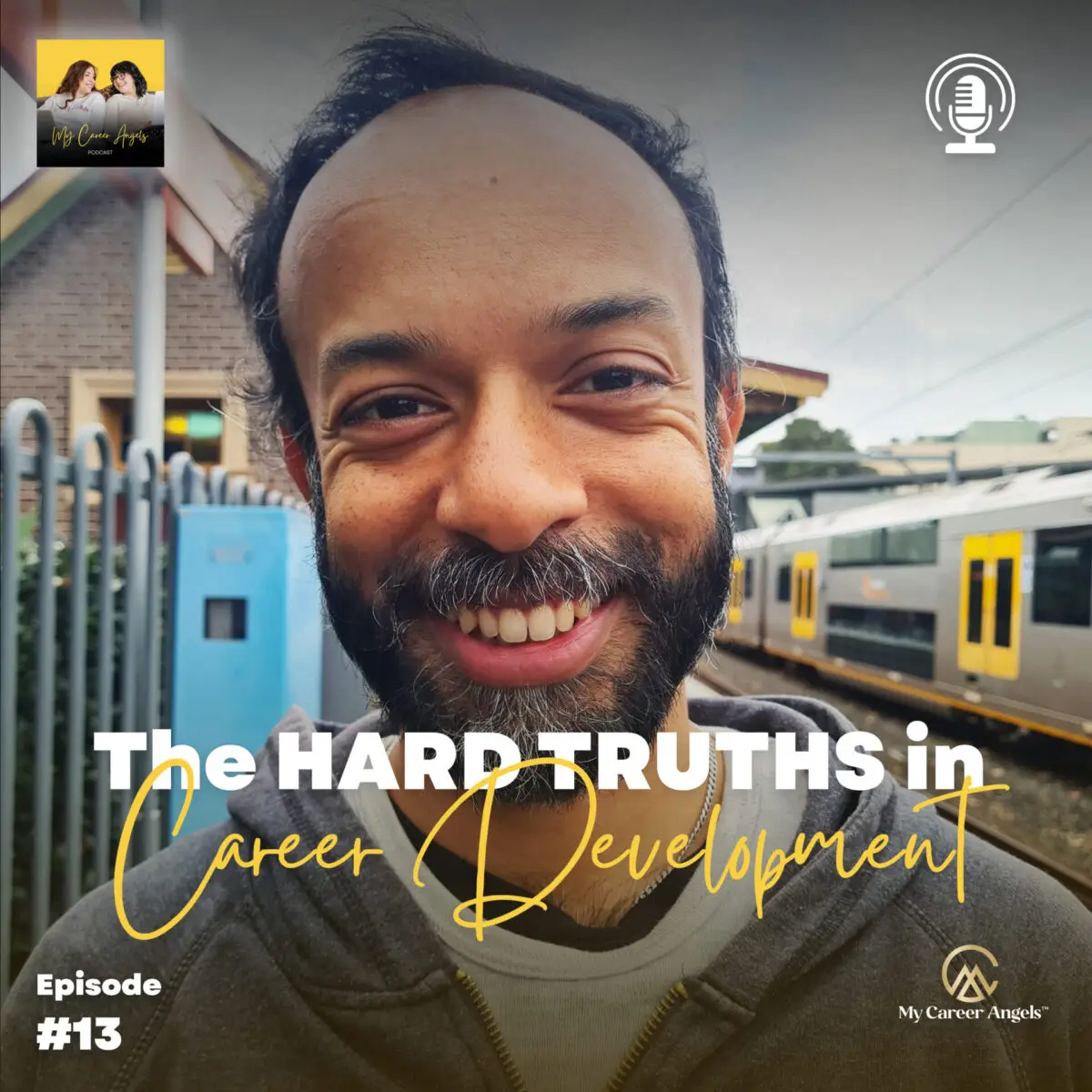
In this episode, Natasha and guest Zvi Azimov bring their deep experience in tech recruitment and career development to explore what it really takes to work and succeed in Australia.
They discuss the perks of strong workplace protections and competitive pay but don’t shy away from the tougher realities many newcomers face — visa complexities, fierce competition for skilled roles, and the rising cost of living that can catch people off guard.
Natasha highlights how resumes and LinkedIn profiles need to be clear, detailed, and tailored for the Australian market, including specifying relevant regions and industries. Zvi shares insights about navigating visa requirements and the importance of understanding the local work culture, which values clear communication, teamwork, and persistence.
You’ll hear practical advice on how to approach job searching with realistic expectations, the significance of building local networks, and why continuous learning is key to staying competitive.
Whether you’re planning to move to Australia or already navigating its job market, this episode provides a clear-eyed, practical guide to turning your Australian career dreams into achievable goals.
If you want honest insights and actionable steps to succeed in Australia’s competitive employment landscape, tune in and take confident steps forward.
🎧 Listen now for real talk about the Australian job market — the benefits, the challenges, and how to make it work for you.
| Time | Transcript |
|---|---|
| 00:00 | hi welcome back to another episode of Career Reshaped our guest today is a |
| 00:05 | familiar face from last season Zvi has been a recruiter and working with global |
| 00:09 | technology companies expanding in Asia-Pacific for almost 20 years hey |
| 00:15 | it's Natasha and I'm Pauline we're so pumped to bring you even bigger and |
| 00:19 | better stuff this season 2 of Career Reshape we've got new guests free master |
| 00:24 | classes and all the good vibes you'll only find here so don't forget to hit |
| 00:29 | subscribe follow us on Spotify at Careershaped and check us out on |
| 00:34 | Instagram at my.career.angels hi it's SV welcome back hello hi so last |
| 00:41 | time we had you on we dove deep into your career and how Sheba is redefining |
| 00:46 | tech recruitment in the APAC region but for those who missed it can you give us |
| 00:51 | a quick refresher on your path and what Sheba is all about sure um so I've been |
| 00:55 | a recruiter in the technology space working with software vendors in Asia |
| 01:00 | Pacific for almost 20 years um started out focusing mainly on sales roles and |
| 01:06 | have progressed up into all different roles for go to market teams including |
| 01:10 | sales executive leadership um as well as delivery and technical teams as well uh |
| 01:16 | mainly focus on Australia Singapore and Japan so what we promised our listeners |
| 01:22 | last time was that we were going to bring you back on with your recruiter |
| 01:25 | cap on not your career history yet good I'm glad it's on so in our previous |
| 01:31 | conversation we talked about leadership scaleups and the nuances of hiring in |
| 01:36 | SAS and cyber security what's changed in your world or the hiring landscape since |
| 01:41 | we last spoke not much has changed in my world to be honest um you know it's it's |
| 01:46 | as difficult as ever uh to find the right people and the right staff and I |
| 01:50 | guess a lot I have a lot of conversations with companies that are |
| 01:54 | focused around strategy and how to attract the best people and because |
| 01:59 | I'm a lot more client driven I'm a lot more on the um client side in terms of |
| 02:03 | headhunting and searching for people for my clients so yeah I mean the |
| 02:08 | conversations are still very much about how do I get the best talent how do I |
| 02:12 | attract the best talent and how do I retain the best talent so speaking of |
| 02:15 | talent you've obviously seen thousands of résumés when you open one up what are |
| 02:20 | you actually scanning for in say like the first 10 seconds i mean in simple |
| 02:24 | terms it's the fit right um having worked in my industry now for |
| 02:30 | such a long period of time I'm I do know who the players are and um who the\ |
| 02:35 | different companies are that are relevant to the client and the job that |
| 02:38 | I'm recruiting for so first and foremost have they worked for competitive |
| 02:42 | businesses have they worked for relevant businesses um secondly is tenure so uh |
| 02:48 | yeah the first is can they do the job second is how well and for how long have |
| 02:53 | they done and can they do the job so LinkedIn has become a career essential |
| 02:57 | for many industries what do you see or what do you believe is the number one |
| 03:02 | mistake candidates make on their profiles that could cost them their |
| 03:06 | opportunities lack of information lack of data um it's pretty straightforward |
| 03:10 | so um the less information you have on your LinkedIn profile the harder it is |
| 03:15 | to find you so to give you context um if somebody has only listed where they've |
| 03:21 | worked and how long they've worked there for and what their job title was or |
| 03:25 | is um that's probably you know the bare minimum of what a LinkedIn profile |
| 03:31 | looks like and it's got no data but the reality is that all recruiters are on |
| 03:35 | LinkedIn and we're not looking for just the company name and the title that |
| 03:40 | that person might be working for because titles can be sometimes a bit ambiguous |
| 03:44 | especially in certain regions where you know in Australia for example a you know |
| 03:50 | a regional sales manager or a sales director could be a BDM whereas um you |
| 03:56 | know and a and a an account executive type salesperson whereas in for example |
| 04:00 | parts of Asia I've had people business development directors that are you know |
| 04:05 | appointment setters so it's a difficult one in that respect so not having |
| 04:11 | information like markets you've sold to this is specifically for a sales role |
| 04:16 | though but markets you've sold to geographies you've sold to um whether |
| 04:20 | it's Australia northern region southern region um if it's Singapore you know is |
| 04:25 | it Azan is it Asia Pacific is it Japan is it just Singapore um you know and |
| 04:31 | those sorts of things help you get found by people who are looking for your skill |
| 04:36 | set as compared to someone who's just looking for an account executive in |
| 04:40 | Singapore that's going to be a lot harder to find you're going to be a |
| 04:44 | needle in that hay stack as compared to you know the flag at top the mountain if |
| 04:48 | that makes sense yeah fair so when you then put in your search parameters would |
| 04:53 | you put those specific things into your search instead of just the that broad |
| 04:58 | umbrella because it's both right there's no such thing as a single search for a |
| 05:02 | role when you're a head hunter you know what you're looking for you know you'll |
| 05:05 | do a couple of searches in a couple of different ways right because you want to |
| 05:08 | cover as much ground as you can first and foremost as a recruiter with a |
| 05:12 | recruiter license on LinkedIn I can write down my list of all of the |
| 05:16 | competitor businesses that I can think of assuming that the person that you're |
| 05:20 | referring to works for one of those businesses they'll get found um but they |
| 05:25 | might be working for an a startup they may be working for a large business |
| 05:31 | within so if you think about the large businesses in this in the IT space being |
| 05:36 | SAP Oracle IBM you know etc. those businesses have divisions that sell |
| 05:43 | certain products whether it's marketing software cyber security data analytics |
| 05:47 | software what have you so if that person hasn't identified that they're a data |
| 05:51 | and AI salesperson working at you know Salesforce or Google then they're just |
| 05:58 | going to they're going to get lost they're going to fall through the cracks |
| 06:00 | so yeah we'll do a company search but then we'll also do a RO search and we'll |
| 06:04 | do a keyword search and a combination of all the above amazing so it's about |
| 06:08 | being as specific and detailed as possible do you feel that the same needs |
| 06:14 | to be said in a resume or can a resume be a little bit |
| 06:18 | more broad again it's so to what you're saying it's probably the opposite it's |
| 06:25 | less about being more specific and more being about more general so you want as |
| 06:29 | many keywords you got to think about who's searching for you and what |
| 06:32 | keywords are they going to be using um and what information are they going to |
| 06:35 | be looking for in sort of in what gets them to find you so um in a resume I'm a |
| 06:43 | I'm a believer personally that three maximum four pages for a resume is about |
| 06:47 | as much as you need nowadays but again in there in the resume there's some very |
| 06:52 | important fundamentals that need to be in there i have some clients that simply |
| 06:57 | will reject a candidate based on their CV regardless of the fact as to whether |
| 07:01 | or not I've said this person's amazing i know the person i know they're right for |
| 07:06 | the role and I've built the credibility with the client and I've got some |
| 07:09 | clients that will interview my candidates without a CV they'll just say |
| 07:12 | Okay if you if you think they're good I'll meet them." And then you know it |
| 07:16 | goes from there but I also have clients that are you know we'll simply |
| 07:20 | reject somebody off the basis of their CV if it doesn't have key |
| 07:24 | accomplishments achievements um you know again looking at a salesperson as the |
| 07:29 | theme here um has what sales target has that person work towards what |
| 07:34 | percentage of their sales target did they achieve what are the key customers |
| 07:38 | that they've brought in the door that are new logos or if they're if they're |
| 07:41 | an account executive if they're an you know an account manager what was the |
| 07:46 | retention and growth targets that they were able to achieve and you know the |
| 07:50 | key customers that they dealt with if you can't put that sort of information |
| 07:52 | in there then you're not giving the person viewing that enough to work off |
| 07:58 | um but also at the same time um the keywords are just as important because |
| 08:03 | just like on LinkedIn where uh recruiters are searching based on |
| 08:07 | keywords and those sorts of things when you apply to a job typically you're |
| 08:10 | going to be automatically put into an applicant tracking system and |
| 08:14 | ATS within a company's um database if you like of candidates and so they're |
| 08:21 | usually searchable so even if you apply for a role today you want your CV to be |
| 08:26 | found tomorrow when they're looking for that role a different role or what or |
| 08:31 | you know you may not be perfect for the role you're applying for but then next |
| 08:34 | week you are perfect for a role that you haven't applied for and you want them to |
| 08:38 | be able to find you before we get into the nitty-gritty of this topic we just |
| 08:41 | wanted to check in and say that if you believe that you need some assistance |
| 08:45 | and that we could help you reach out to us today check out our website join our |
| 08:50 | newsletter would love to be in touch we wanted to quickly mention that |
| 08:54 | subscribing to the podcast is the best way to support the show and ensure you |
| 09:00 | never miss an episode it's super easy just click the subscribe button whenever |
| 09:05 | you're listening thanks for tuning in so in terms of those key words um how does |
| 09:11 | one go about identifying what would be the right key words cuz as from what I |
| 09:16 | understand you know you look at the job ad and you kind of the job ad itself |
| 09:21 | will tell you exactly who they're looking for and you're going to use |
| 09:24 | those words you're going to pull those uh words from the ad but now you're |
| 09:28 | saying um look ahead look a little bit to the future so how do |
| 09:34 | you target that job ad specifically whilst at the same time ensuring that |
| 09:39 | tomorrow there might still be an opportunity for you because of your |
| 09:44 | resume but like I said it it's relevant to the job that you're applying |
| 09:49 | for in my world you can sort of put it down to three main silos that I work |
| 09:54 | across right so I can speak to myself one being executive and leadership so in |
| 09:59 | that again it's going to be what did you achieve it was always about achievements |
| 10:03 | accomplishments and skills right they're the three main areas right so what did I |
| 10:07 | achieve or accomplish for a salesperson overachieving target what was your sales |
| 10:12 | target all the things that I mentioned there um if it's a consultant or an |
| 10:16 | implementation person what were the implementation timelines how long were |
| 10:20 | they how many did you manage at any given time what were the size of the |
| 10:23 | implementations do you have profit loss responsibilities all of those different |
| 10:26 | factors because there's going to be different roles which require different |
| 10:31 | things so if you put those things in there in terms of what made you |
| 10:34 | successful at your job and what were the key highlights then that's going to get |
| 10:39 | you found and then obviously for technical roles that's where you're |
| 10:42 | going to have to put in you know if you're a developer or you know a |
| 10:45 | programmer what languages do you know what languages do you use even if you're |
| 10:49 | working on five different projects each project should list what was the |
| 10:53 | technology stack what did you use what did you program with what did you |
| 10:56 | deliver with etc. so the more um information in that respect that you can |
| 11:03 | put the better because for a technical person if you're a .NET developer you |
| 11:07 | need to have net you've got to you've got to have all the different technology |
| 11:11 | stacks that you've worked with so that when I as a recruiter whether external |
| 11:15 | or internal go to my database and I look fornet and developer you come up in |
| 11:22 | saying all of that I have a question following on from having all that |
| 11:27 | information is there a time when you could be overly polished so have a bit |
| 11:32 | too much information where it starts to become maybe not trustworthy that you |
| 11:36 | say you can do all of these things and then does testing need to come into play |
| 11:41 | or are there certain questions you're going to ask to really verify that good |
| 11:44 | question so so there is sometimes so some of my clients have technical um |
| 11:49 | screen screening that they do as a part of their interview process um but on one |
| 11:54 | hand it also depends on the formatting of the CV right so if you've looking at |
| 11:59 | technical roles right if you've been in a company let's say for 4 years and |
| 12:04 | you've worked across 20 projects if you put 20 projects and all the stuff that |
| 12:08 | you've done that's going to be four pages on its own right cuz you're going |
| 12:11 | to have all the different technology stacks all the different timelines all |
| 12:14 | the different outcomes and so on and so forth it's going to be a bit of a an |
| 12:18 | overkill right so summarizing it's also important but at the same time for |
| 12:23 | technical people I would recommend having a skills matrix right um of |
| 12:29 | here's all of the different all the different technology stacks I've used |
| 12:31 | and the amount of years experience and then if you want to outline the top five |
| 12:36 | projects that you've worked on and the technologies using those projects then |
| 12:40 | that really gives a really good snapshot so if you find that you've got too much |
| 12:45 | information you need to condense it down into snapshots to not create too long |
| 12:50 | nobody wants to read a a six seven eight nine page CV right and also if you've |
| 12:54 | had a really long career and you've had a lot of experience over that time in |
| 12:58 | different companies there's a there comes a cut off point where the |
| 13:01 | information becomes irrelevant so you know if you've if you were an accountant |
| 13:08 | 15 years ago and now you're selling accounting software for the last 10 |
| 13:11 | years you don't need to give me the companies you worked with as an |
| 13:15 | accountant in the CV what's relevant is your accounting software experience so |
| 13:20 | you know cutting it off after I don't know roughly 10 max 15 years is probably |
| 13:26 | also worth considering as well because you lose relevance and especially in the |
| 13:31 | IT or the software game that I play um you know the technology you worked with |
| 13:36 | 10 years ago is largely obsolete now so um you know you've got to factor that in |
| 13:43 | as well so what advice would you give for somebody who wants |
| 13:47 | to go back so let's just say we'll take this accountant as an example they were |
| 13:52 | accountant 15 years ago they now selling the accounting software but they missed |
| 13:57 | it they want to become an accountant again um and now they're applying for |
| 14:02 | accounting roles but that experience was 15 years ago and what we find is a lot |
| 14:08 | of our clients are in that similar position how then would you recommend |
| 14:13 | the resume to be structured do you do you recommend breaking it up saying |
| 14:19 | relevant skills and other skills like relevant experience other |
| 14:23 | experience how best to present that so if you're looking to return to a |
| 14:28 | previous specialty I would I would personally recommend having a very clear |
| 14:32 | highlight around updated certifications um so for example for an accountant |
| 14:38 | whether they've gone back and got their CA CPA or had it updated and recently |
| 14:42 | updated just showing some sort of indication that they their skill set is |
| 14:47 | still there you know and also maybe at least a paragraph at the start of the CV |
| 14:53 | not quite a cover letter but at least a paragraph outlining why you're looking |
| 14:57 | to go back to that previous type of environment so you know I see that a lot |
| 15:03 | with moms returning to work um after a hiatus of a number of years to to have |
| 15:09 | kids and what have you um and some of them want to go back to what they were |
| 15:12 | doing before some of them want to go somewhere new um you know some of them |
| 15:16 | just want that first opportunity or might be looking for something 3 days a |
| 15:19 | week instead of 5 days a week whatever the reasons were and context helps so |
| 15:24 | you know the first page is going to always going to be that snapshot so if |
| 15:28 | you can have the first paragraph highlighting relevance story and |
| 15:33 | objective that's always going to be useful as well yeah brilliant i want to |
| 15:38 | jump back quickly to the skills matrix that you mentioned because I have a |
| 15:41 | feeling that that will bring up some questions in regards to one are you |
| 15:46 | explaining that as a table so I know a lot of people have a fear of tables on |
| 15:52 | their resumes because they believe it will not pass the ATS what do you say to |
| 15:56 | that it's not been a problem for me historically I've not seen that be an |
| 15:59 | issue I'm not sure about that that sounds like what's more of a formatting |
| 16:05 | consideration so you know I stick to Excel and Word um copy paste um within |
| 16:11 | Word itself you can create a table you don't have to copy paste an Excel table |
| 16:17 | you can create a table inside the Word document as a Word function and I think |
| 16:22 | if you do that you shouldn't have a problem equally so um if you're saving |
| 16:28 | your resume as a PDF some ATS's will pick it up some won't it it's it's not |
| 16:33 | something that is going to have a you know a blanket thing just whatever you |
| 16:38 | do don't save your CV as an image if you save it as an image if you're a |
| 16:43 | design person and you're a media person and you know that's a fundamental part |
| 16:48 | of your CV great um you know in how you present it and I can understand that |
| 16:53 | just don't do it because it won't get picked up um ATS's do not pick up images |
| 16:58 | they will pick up PDFs but they won't pick up images |



Take the first step toward a smarter, more effective job search with The Unseen Advantage. This ebook is designed for job seekers who are ready to move past outdated methods, create genuine opportunities, and position themselves as the candidate employers are looking for.
When you take time to reflect on your career and align it with your values, you’re not only investing in your own growth — you’re creating a ripple effect that impacts your family, your workplace and your wellbeing.
Whether you’re feeling stuck, ready for change, or simply craving more purpose in your work, Career Coaching can help you move forward with clarity and confidence.
Start your Next Chapter Today!